Data Scientist & AI Researcher
Google Cloud Faculty Expert · IEEE Member · 10+ Years in AI Research
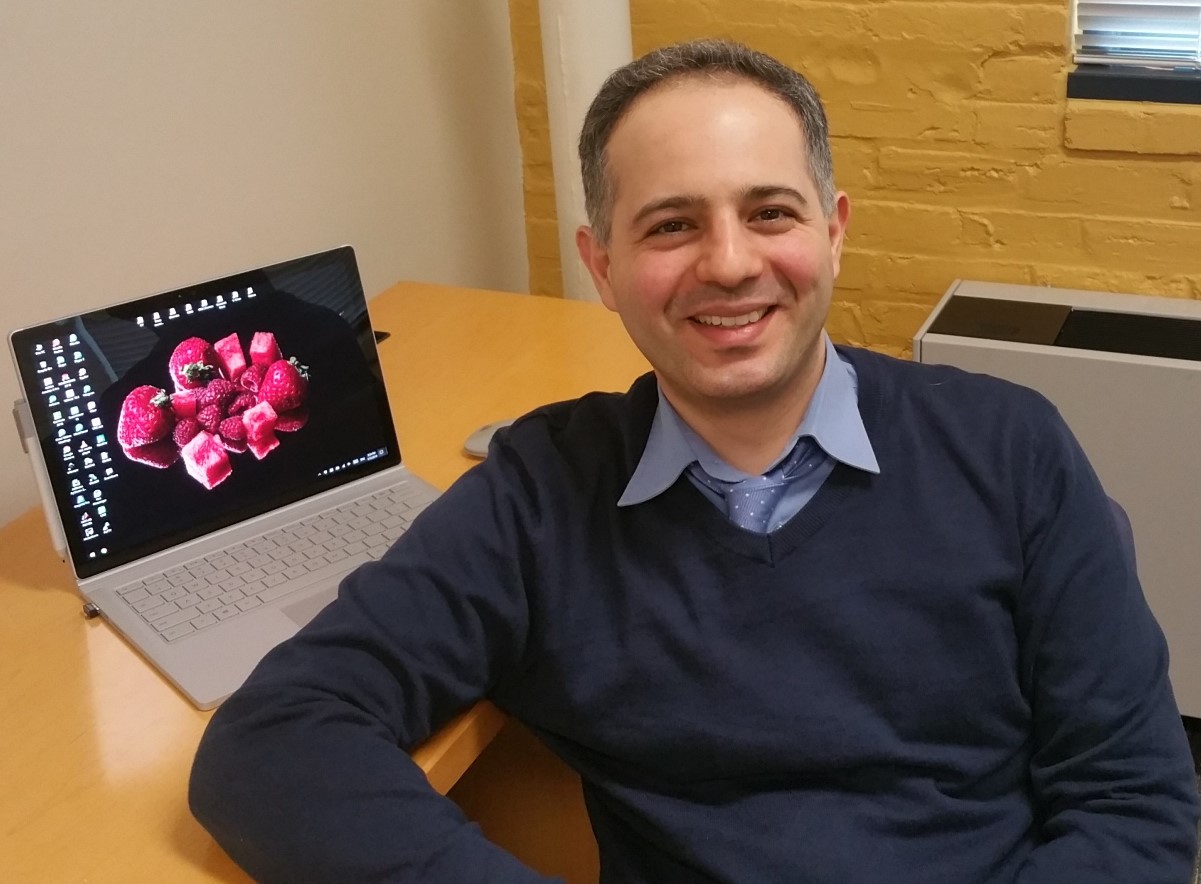
Amir Jafari, Ph.D., is an AI Researcher and Google Cloud Faculty Expert. His research focuses on Generative AI, Multi-Agent Systems, Natural Language Processing (NLP), Natural Language Generation (NLG), and Predictive Modeling—areas where he has made sustained contributions over more than a decade.
His work spans a broad spectrum of artificial intelligence methodologies, including deep learning, large language model (LLM) design and orchestration, statistical modeling, signal processing, and optimization of recurrent neural networks.
In recent years, his primary research has centered on Generative AI architectures and autonomous multi-agent systems—developing frameworks in which collaborative agents address complex, real-world problems at scale—alongside continued advances in NLP/NLG and GPU-accelerated training of large-scale models.
Technical competencies spanning AI research, software engineering, and cloud platforms.
Active research programs in AI, neural networks, and data-driven decision making.
Research on large language model orchestration, multi-agent architectures, and Natural Language Generation (NLG) and Understanding (NLU) for complex real-world tasks.
Novel training methods for recurrent neural networks, efficient optimization algorithms, and clustering methods for detecting network extrapolation in adaptive control systems.
Deep learning approaches for temporal forecasting using LSTM, GRU, and Transformers, with comparative studies against classical ARMA/ARIMA baselines.
Application of CNNs and pre-trained architectures (DenseNet, ResNet) to medical image analysis, surgical outcome prediction, and disease detection.
TRAILS Seed Project — Trustworthy AI Systems
June 2024 – Present · Advancing research on trustworthiness of AI through novel algorithmic approaches and validation methodologies.
Energy Technology and Decision Making Research Initiative
May 2025 – Present · Investigating intersection of energy technologies and decision-making frameworks for sustainable resource utilization.
Graduate-level data science courses with a focus on theory, implementation, and real-world application.
Encoder and decoder language models, transformers, BERT variants, fine-tuning strategies, and NLP pipelines for real-world applications.
Supervised and unsupervised learning, regression, classification, ensemble methods, and model evaluation and selection.
Neural network architectures — MLP, CNN, RNN, LSTM, GRU, Transformers — with hands-on GPU training using TensorFlow and PyTorch.
Knowledge discovery, pattern recognition, clustering, association rules, and data preprocessing at scale.
Visual communication of data insights using Python libraries and interactive dashboards for exploratory analysis.
Cloud infrastructure for data science — GCP, AWS, and Azure — including distributed computing and big data processing frameworks.
End-to-end applied data science projects integrating machine learning, data engineering, and communication skills.
Peer-reviewed journal articles, conference papers, and preprints.
For a complete, always up-to-date list of publications with citation counts and full metrics, visit my Google Scholar profile.
Open Google Scholar Profile
Sorted newest first. To add a paper, edit data/publications.json and push to GitHub.
Research and applied projects spanning AI, healthcare, finance, and engineering.
Ongoing research on Natural Language Generation (NLG) and Natural Language Understanding (NLU) using multi-agent architectures and state-of-the-art LLMs including LLAMA 2, Dolly, and QLoRA fine-tuning methods.
An automated speech scoring engine that classifies audio files using transcription and language models in series. Transcriber and language models are applied in a pipeline to assess speech quality. Applicable to education and the music industry.
Developed a NARX (Nonlinear Auto Regressive with Exogenous inputs) model for S&P 500 prediction. Efficient RNN training methods based on novel error surface analysis were used. Results compared against classical ARMA and ARIMA baselines.
Processed over one million CAT scan images from raw DICOM files to detect and classify intracranial hemorrhage and bleeding types. Used pre-trained DenseNet, ResNet, and ImageNet architectures.
Developed a curated repository of take-home laboratory experiences for undergraduate STEM courses, enabling remote access where lab experiences were previously impractical. Materials cost less than a textbook and are available online.
Developed a Diagonal Recurrent Neural Network (DRNN) observer combined with elastic drive system dynamics to identify nonlinear friction characteristics (Coulomb and viscous friction torques). Significantly outperforms traditional linear observers.
Designed and built an autonomous ground vehicle from scratch, programmed with an Arduino embedded system. Used fuzzy logic algorithms for obstacle avoidance and path following in real-time environments.
Novel training methods for RNNs applied to system identification. A novelty sampling method using self-organizing maps collects data wisely; clustering detects extrapolation. Applied to magnetic levitation system control (simulated and experimental).
Python packages published on PyPI for the data science and deep learning community.
A comprehensive Python toolbox for time series analysis and forecasting, covering classical statistical models (ARMA, ARIMA) and modern deep learning architectures (LSTM, Transformers).
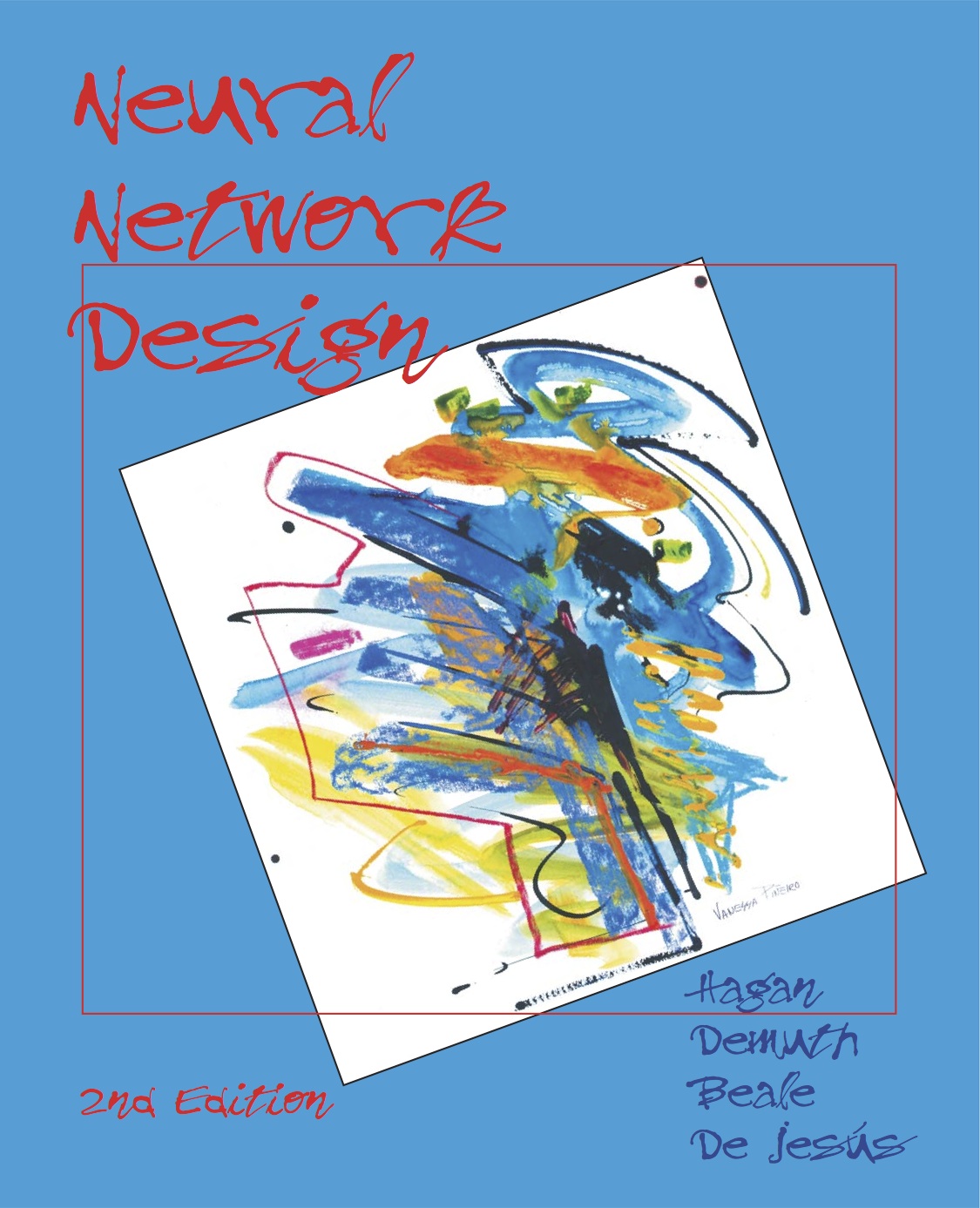
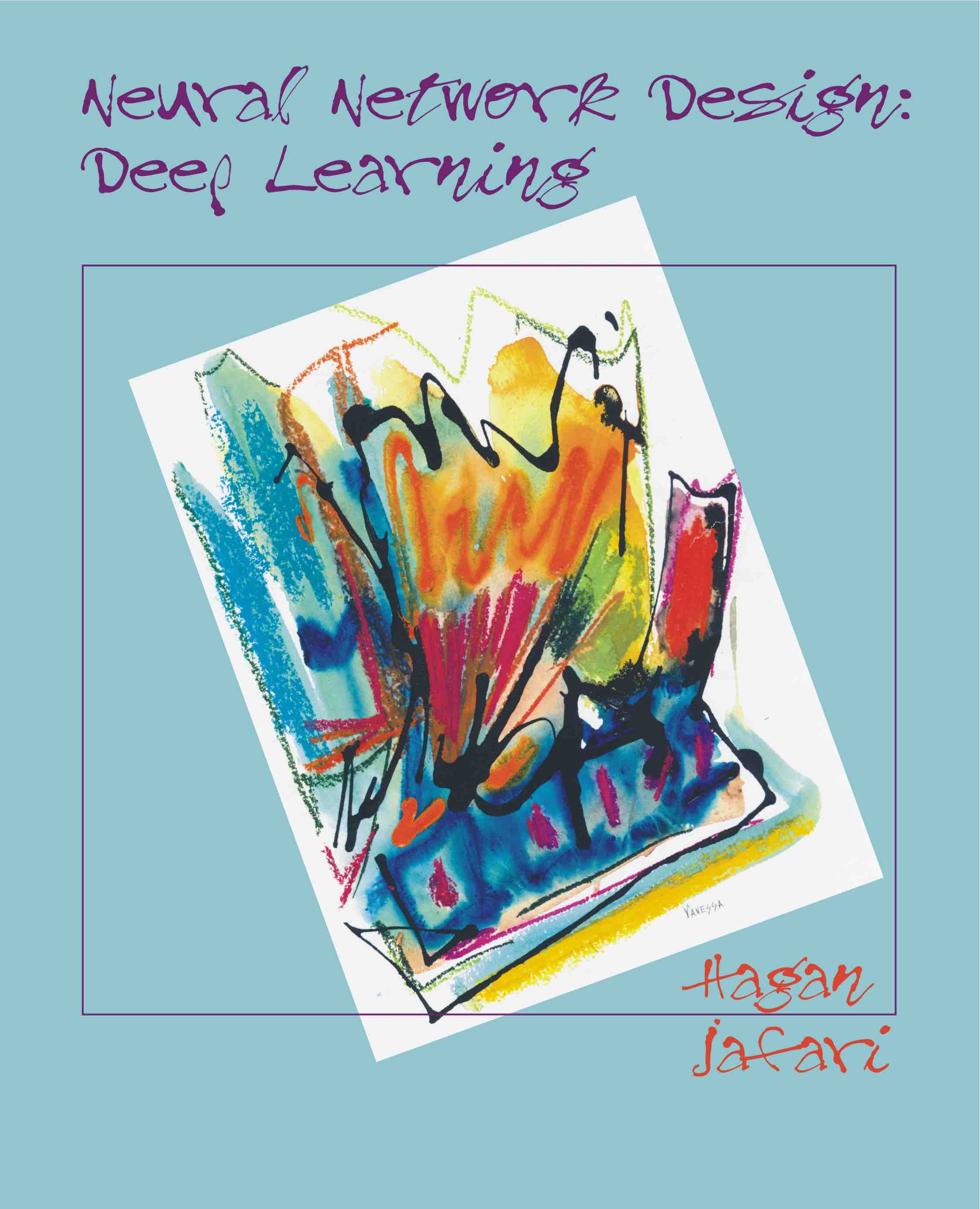
Python demonstrations paired with the Neural Network Design and Neural Network Design: Deep Learning textbooks. Interactive visualizations of neural network concepts.
An open-source textbook covering neural network design principles and deep learning methodologies. Features solved problems and practical exercises. Companion package available on PyPI as nndesigndemos.
timeseries-toolbox · Python Package
A comprehensive Python toolbox for time series analysis and forecasting. Covers classical statistical models (ARMA, ARIMA, Box-Jenkins) and modern deep learning architectures (LSTM, GRU, Transformers, NARX). Designed for researchers and practitioners working on sequential data problems in finance, engineering, and science.
pip install timeseries-toolbox
ARMA, ARX, ARIMA, and Box-Jenkins methods for classical statistical time series analysis and forecasting.
LSTM, GRU, and Transformer-based architectures for sequence modeling and multi-step ahead forecasting.
NARX, NAR, Focused Time Delay, and Elman network implementations for nonlinear time series identification.
nndesigndemos · Python Package
A collection of Python demonstrations paired with the Neural Network Design and Neural Network Design: Deep Learning textbooks by Hagan, Demuth, Beale, and Jafari. Provides interactive visualizations and hands-on exercises to reinforce theoretical concepts. All classic MATLAB-based textbook demos have been reimplemented in Python.
pip install nndesigndemos
Interactive demos paired chapter-by-chapter with the Neural Network Design textbooks for structured, hands-on learning.
Visualizations covering perceptrons, backpropagation, training algorithms, recurrent networks, and deep learning architectures.
All classic MATLAB-based textbook demos reimplemented in Python for global accessibility and open-source contribution.
NNSOM · Python Package
A novel clustering neural network package for machine learning and deep learning projects. Implements Self-Organizing Maps (SOM) and advanced unsupervised learning methods designed to handle high-dimensional data with interpretable cluster representations. Suitable for exploratory data analysis, anomaly detection, and visualization.
pip install NNSOM
Full SOM implementation with competitive learning, neighborhood functions, and topographic map visualization for high-dimensional data.
Novel clustering methods with support for sequential and high-dimensional data, going beyond traditional K-Means approaches.
Built-in tools for visualizing cluster maps, U-matrices, distance matrices, and data distributions in trained SOMs.